Read Our Latest Blogs

09 Mar
454
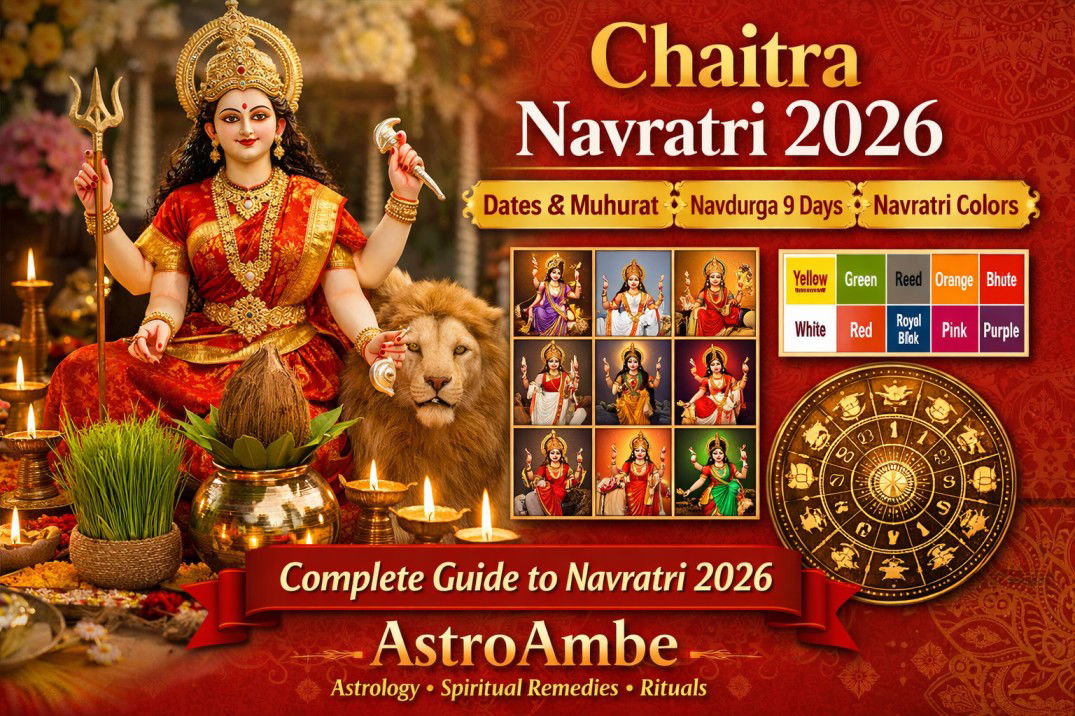
Chaitra Navratri 2026: Date, Ghatasthapana Muhurat, 9 Days Goddess, Colors & Astrology Significance
Chaitra Navratri 2026 is among Hinduism’s most sacred festivals. Dedicated to Maa Durga’s nine divine forms, devotees across India fast, pray, and seek blessings during this spiritually significant period.
This Navratri occurs in the Chaitra month of the Hindu lunar calendar, usually in March or April. In many regions, it also marks the Hindu New Year. The spring season symbolizes renewal and new beginnings, aligning with the festival's spiritual message.
During these nine days, devotees purify their minds, strengthen their faith, and invite positive energy into their lives.
With this overview in mind, the following guide provides essential details for Chaitra Navratri 2026, including the festival's dates and Ghatasthapana muhurat, as well as daily goddess honors, colors, rituals, and astrological significance. Let's begin with the important dates for this auspicious festival.
Also Read - तुला राशि लव लाइफ 2026– प्रेम संबंधों की संपूर्ण भविष्यवाणी
Chaitra Navratri 2026 Date
Many people search online asking, “Chaitra Navratri 2026 kab hai?”
According to the Hindu Panchang, Chaitra Navratri in 2026 will start on 19 March and end on 27 March. The last day, Ram Navami, celebrates the birth of Lord Rama.
During these nine days, many people visit temples dedicated to Goddess Durga or set up a sacred altar at home for daily prayers.
Although Navratri occurs four times a year, Chaitra and Sharad are most celebrated nationwide.
Ghatasthapana Muhurat 2026
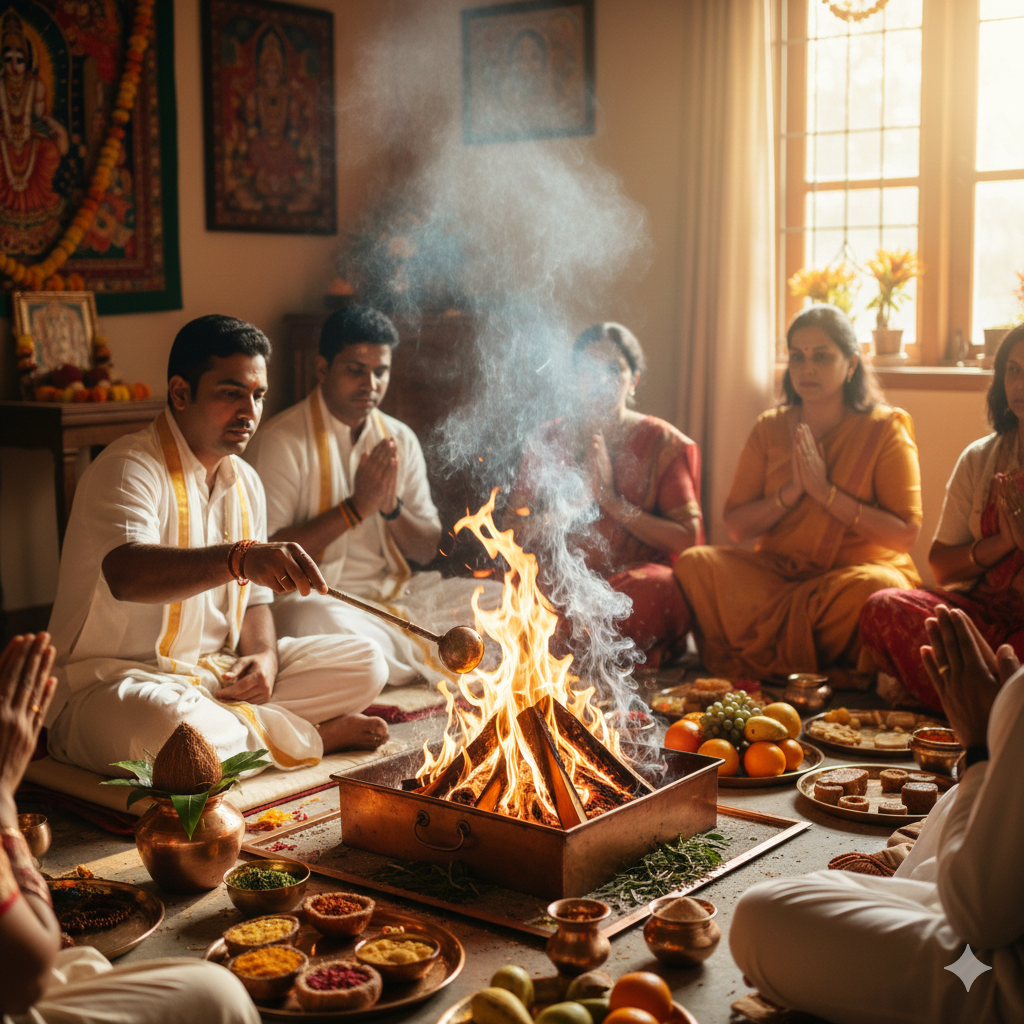
The first day of Navratri begins with Ghatasthapana, also called Kalash Sthapana. This ritual marks the official start of the Navratri celebrations.
During Ghatasthapana, devotees place a kalash (sacred pot) filled with water and decorate it with mango leaves and a coconut. The kalash symbolizes life, abundance, and divine energy.
Traditionally, the kalash is placed near a small bed of soil where barley seeds are planted. Over the next nine days, the seeds sprout, showing growth, prosperity, and the blessings of Goddess Durga.
Performing this ritual during the correct muhurat is considered important because it ensures that the Navratri puja begins under auspicious planetary energies.
Also Read - सिंह राशि लव लाइफ 2026: क्या प्रेम संबंधों में बढ़ेगा तनाव या मिलेगा सच्चा जीवनसाथी?
Navratri 2026 Day-Wise Goddess
Each Navratri day honors a different form of Maa Durga, symbolizing unique spiritual qualities.
| Day 1 | Maa Shailputri | Strength and stability | |
| Day 2 | Maa Brahmacharini | Devotion and discipline | |
| Day 3 | Maa Chandraghanta | Courage and protection | |
| Day 4 | Maa Kushmanda | Creator of the universe | |
| Day 5 | Maa Skandamata | Motherly love and blessings | |
| Day 6 | Maa Katyayani | Power and determination | |
| Day 7 | Maa Kalaratri | Destroyer of negativity | |
| Day 8 | Maa Mahagauri | Purity and peace | |
| Day 9 | Maa Siddhidatri | Spiritual wisdom |
Devotees worship these forms to seek strength, wisdom, and spiritual growth.
Navratri 2026 Colors and Their Meaning
Each day of Navratri has a special color symbolizing a unique spiritual energy.
| Day 1 | Yellow | Happiness and optimism |
| Day 2 | Green | Growth and harmony |
| Day 3 | Grey | Balance and stability |
| Day 4 | Orange | Energy and enthusiasm |
| Day 5 | White | Peace and purity |
| Day 6 | Red | Strength and courage |
| Day 7 | Royal Blue | Protection |
| Day 8 | Pink | Love and compassion |
| Day 9 | Purple | Spiritual transformation |
Wearing these daily colors helps devotees feel closer to the goddess's energy.
These colors represent divine qualities honored during Navratri.
Also Read - Who Is the Best Astrologer in India for Accurate Predictions?
Spiritual Significance of Chaitra Navratri
The spiritual meaning of Navratri comes from the story of Goddess Durga defeating the demon Mahishasura after a fierce nine-night battle.
This story highlights the triumph of good over evil.
Navratri reminds people that faith and devotion help overcome challenges and inspire positive change.
Because Chaitra Navratri occurs during the spring season, it also symbolizes renewal and the start of a new spiritual cycle.
Astrology Significance of Chaitra Navratri
In Vedic astrology, Navratri is considered a time when cosmic energies become more supportive for spiritual practices.
Astrologers often suggest that devotees perform Durga worship, chant mantras, and practice spiritual remedies during these nine days. It is believed that these practices can help reduce negative planetary influences and strengthen positive energy in the horoscope.
For example, prayers to Goddess Durga are often recommended for reducing the effects of challenging planets such as Rahu, Ketu, and Shani. Devotees believe that sincere prayers during Navratri can remove obstacles and bring new opportunities.
Because of this spiritual significance, many people also choose this time to start meditation, charity, or spiritual disciplines.
Navratri Remedies for Positive Energy
Navratri is widely considered a favorable time to perform spiritual remedies.
Many devotees light a ghee lamp every evening in front of Goddess Durga and chant Durga mantras to create a positive atmosphere in the home. This practice is believed to bring peace and remove negativity.
Another common ritual involves offering red flowers or sweets to the goddess during daily prayers. Red is associated with Durga's energy and symbolizes strength and devotion.
Reciting sacred texts such as Durga Saptashati or Durga Chalisa during Navratri is also believed to strengthen spiritual protection and bring courage during difficult times.
These rituals are simple but powerful ways to connect with divine energy.
Navratri Fasting Rules
Fasting is an important part of Navratri for many devotees. It is seen as a way to purify the body and focus the mind on spiritual devotion.
During Navratri vrat, people usually avoid grains, onions, garlic, and non-vegetarian food. Instead, they consume fruits, milk, nuts, and special vrat dishes prepared with ingredients such as buckwheat flour or water chestnut flour.
However, the main purpose of fasting is not only dietary discipline. Devotees also spend more time in prayer, meditation, and chanting of sacred mantras.
Difference Between Chaitra Navratri and Sharad Navratri
Chaitra Navratri and Sharad Navratri are both dedicated to Goddess Durga, but they occur in different seasons.
Chaitra Navratri takes place in March or April, during the spring season. It is associated with spiritual renewal and the beginning of the Hindu New Year in several regions.
Sharad Navratri falls in September or October during the autumn season. This Navratri is known for large cultural celebrations, such as Durga Puja and Garba.
While rituals and devotion are similar, celebration styles differ regionally.
Frequently Asked Questions
Q1 What are the nine days of Navratri?
The nine days of Navratri are dedicated to the nine forms of Goddess Durga known as Navdurga. Each day honors a different form of the goddess and represents a different aspect of divine energy.
Q2 What is the ninth day of Chaitra Navratri?
The ninth day is dedicated to Maa Siddhidatri, the goddess who grants spiritual wisdom and divine blessings.
Q3 Why is Navratri celebrated for nine nights?
Navratri lasts for nine nights because it represents the nine forms of divine feminine energy and the spiritual journey toward enlightenment.
Final Thoughts
Chaitra Navratri 2026 is more than just a festival. It is a spiritual journey that inspires devotion, inner strength, and positive change.
During these nine special days, people worship Goddess Durga to ask for protection, prosperity, and spiritual growth. Through prayer, fasting, and meditation, Navratri is a chance to reconnect with divine energy and start a new chapter in life with faith and hope.


GET IN TOUCH
Ready to find your answers?
Consult Acharya Anil Ji today — 50,000+ clients trust his guidance across India and the world
CLIENT EXPERIENCES
Trusted by thousands across India
Real reviews from real clients — verified on Google
R
Rahul Sharma1 week ago

★★★★★
Astro Ambe provided incredible insights into my career path. The accuracy of the Kundli reading was beyond my expectations. Highly recommended!
● Career
P
Priya Mehra3 days ago
★★★★★
I was facing issues in my marriage, and Ambe ji's guidance helped us find peace. The remedies are simple and very effective. Thank you so much.
● Marriage
A
Anish Kapur2 weeks ago
★★★★★
The most authentic astrologer in Surat. Very professional and deep knowledge of Vedic astrology. My Kundli analysis was spot on.
● Kundli
S
Sneha Gupta5 days ago
★★★★★
Found clarity in my relationship after months of confusion. The positive energy during the session was amazing. Truly the best experiences.
● Love
V
Vikram Rathore1 month ago
★★★★★
Helped me choose the right time for my new business venture. Everything is going perfectly as predicted. Exceptional service.
● Business
R
Rahul Sharma1 week ago
★★★★★
Astro Ambe provided incredible insights into my career path. The accuracy of the Kundli reading was beyond my expectations. Highly recommended!
● Career
P
Priya Mehra3 days ago
★★★★★
I was facing issues in my marriage, and Ambe ji's guidance helped us find peace. The remedies are simple and very effective. Thank you so much.
● Marriage
A
Anish Kapur2 weeks ago
★★★★★
The most authentic astrologer in Surat. Very professional and deep knowledge of Vedic astrology. My Kundli analysis was spot on.
● Kundli
S
Sneha Gupta5 days ago
★★★★★
Found clarity in my relationship after months of confusion. The positive energy during the session was amazing. Truly the best experiences.
● Love
V
Vikram Rathore1 month ago
★★★★★
Helped me choose the right time for my new business venture. Everything is going perfectly as predicted. Exceptional service.
● Business
ॐ
THE ASTRO AMBE PROMISE
Here's What You Can Expect
सर्वे भवन्तु सुखिनः सर्वे सन्तु निरामयाः
01
02
03
WHAT OUR CLIENTS SAY
The Golden Words of — Our Clients
LJ
★★★★★
"Acharya Anil Ji's Nakshatra-level analysis gave me clarity I had never received anywhere else. His predictions were precise and the remedy actually worked."
LOVE ASTROLOGY
SJ
★★★★★
"AstroAmbe provides accurate and insightful astrology readings. Their predictions are detailed and have been helpful in navigating life's challenges. Highly recommended."
MARRIAGE ASTROLOGY
SV
★★★★★
"Very prompt and knowledgeable. Acharya Anil Ji's predictions were almost accurate. It was a wonderful experience and I will definitely consult again."
CAREER ASTROLOGY
RP
★★★★★
"The Navamsa chart reading for my marriage was incredibly precise. Anil Ji identified the exact planetary issue and gave the right remedy. Within 3 months things changed."
LOVE MARRIAGE
PK
★★★★★
"I was skeptical at first but Acharya Anil Ji's reading was shockingly accurate. He told me things about my past that no one could have known. Highly recommend."
VASHIKARAN
LJ
★★★★★
"Acharya Anil Ji's Nakshatra-level analysis gave me clarity I had never received anywhere else. His predictions were precise and the remedy actually worked."
LOVE ASTROLOGY
SJ
★★★★★
"AstroAmbe provides accurate and insightful astrology readings. Their predictions are detailed and have been helpful in navigating life's challenges. Highly recommended."
MARRIAGE ASTROLOGY
SV
★★★★★
"Very prompt and knowledgeable. Acharya Anil Ji's predictions were almost accurate. It was a wonderful experience and I will definitely consult again."
CAREER ASTROLOGY
RP
★★★★★
"The Navamsa chart reading for my marriage was incredibly precise. Anil Ji identified the exact planetary issue and gave the right remedy. Within 3 months things changed."
LOVE MARRIAGE
PK
★★★★★
"I was skeptical at first but Acharya Anil Ji's reading was shockingly accurate. He told me things about my past that no one could have known. Highly recommend."
VASHIKARAN
AM
★★★★★
"The Shani Puja performed by Anil Ji was done with complete Sankalpa and proper Havan. My Sade Sati period was very difficult but after the puja things slowly improved."
SHANI PUJA
VS
★★★★★
"Got my Kundali matched before my wedding. The Ashtakoota analysis was thorough. Anil Ji also pointed out a Mangal Dosha that others had missed and gave the right remedy."
KUNDALI MATCHING
NK
★★★★★
"My love life was a complete mess. Anil Ji identified Venus in the 6th house as the root cause and gave a specific mantra. Within weeks my relationship improved. Pure Vedic wisdom."
LOVE PROBLEM
DS
★★★★★
"Career was stuck for 2 years. Anil Ji looked at my 10th house and Saturn Dasha and told me exactly when to switch jobs. I followed the timing and got promoted within a month."
CAREER ASTROLOGY
MR
★★★★★
"The Pitra Dosha Puja changed the energy in our family. After the ritual performed by Anil Ji we finally got peace and the property dispute got resolved."
PITRA DOSHA PUJA
AM
★★★★★
"The Shani Puja performed by Anil Ji was done with complete Sankalpa and proper Havan. My Sade Sati period was very difficult but after the puja things slowly improved."
SHANI PUJA
VS
★★★★★
"Got my Kundali matched before my wedding. The Ashtakoota analysis was thorough. Anil Ji also pointed out a Mangal Dosha that others had missed and gave the right remedy."
KUNDALI MATCHING
NK
★★★★★
"My love life was a complete mess. Anil Ji identified Venus in the 6th house as the root cause and gave a specific mantra. Within weeks my relationship improved. Pure Vedic wisdom."
LOVE PROBLEM
DS
★★★★★
"Career was stuck for 2 years. Anil Ji looked at my 10th house and Saturn Dasha and told me exactly when to switch jobs. I followed the timing and got promoted within a month."
CAREER ASTROLOGY
MR
★★★★★
"The Pitra Dosha Puja changed the energy in our family. After the ritual performed by Anil Ji we finally got peace and the property dispute got resolved."
PITRA DOSHA PUJAVEDIC KNOWLEDGE HUB
View All Posts →
Latest From Our Blog
Featured
Kala Jadu Symptoms and Remedies: A Complete Vedic Astrology Guide
By Astrologer Anil Acharya | 15+ Years Experience | 5,000+ Consultations | AstroAmbe.comKala jadu, or black magic, is the use of tantra, man...
Knowledge

How to rebuild a relationship after cheating — and what your kundli says about it
Knowledge

Can I Chat with an Astrologer for Free? Here’s What You Should Know
Knowledge

Black Magic Effects on Marriage: Signs, Causes, and Vedic Remedies
Knowledge

प्रेमिका रूठ गई हो या दूर हो गई — यह प्रेमिका वशीकरण मंत्र अपनाएं
Also Trending

✖